Endel Põder's web page


Research topics
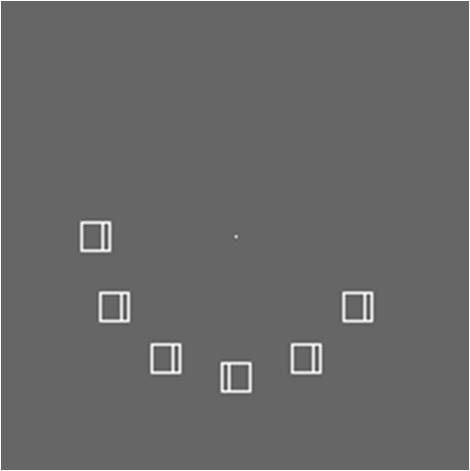
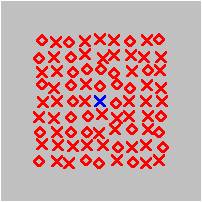
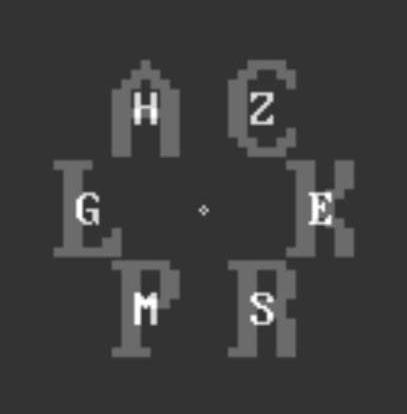
- pattern recognition
- attention
- crowding
My research interests
I am trying to understand how vision works.
I think that detection and recognition of patterns are the most essential in it.
There is much more information in the visible world than we are able or need to use.
An important function of any visual system is to select relevant and ignore irrelevant aspects of the world.
The mechanisms that mediate the selection are named “attention”.
Many of my studies are in some way related to that.
Another frequent keyword is “crowding” - deterioration of perception when several objects are located close to each other,
usually in peripheral vision. Then, our visual system "selects" some kind of information too, and loses other.
My methods are psychophysical experiments and mathematical or computational modeling.
Currently, I am trying some experiments with artificial neural networks too.
Publications on vision
- Põder, E., & Kosiùo, M. (2019). What limits search for conjunctions of simple visual features? Journal of Vision, 19(7):4, 1–13.
Article
- Põder, E. (2018). Discrimination of spatial phase: The roles of luminance distribution and attention. Vision Research, 150, 1-7.
Article
- Põder, E. (2017). Combining local and global limitations of visual search. Journal of Vision, 17(4): 10, 1-12.
Article
- Põder, E. (2014). Crowding by a single bar: Probing pattern recognition mechanisms in the visual periphery. Journal of Vision, 14(13): 5, 1-12.
Article
- Põder E (2014). The changing picture of object substitution masking: Reply to Di Lollo (2014). Front. Psychol. 5:1004. doi: 10.3389/fpsyg.2014.01004
Article
- Põder, E. (2013). Attentional gating models of object substitution masking. Journal of Experimental Psychology: General, 142(4), 1130-1141.
Article Manuscript
- Põder, E. (2012). On the rules of integration of crowded orientation signals. i-Perception, 3, 440–454.
Article
- Põder, E. (2011). Perception of multi-stable dot lattices in the visual periphery: An effect of internal positional noise. Journal of Vision, 11(2):11, 1–9.
Article
- Põder, E. (2008). Crowding with detection and coarse discrimination of simple visual features. Journal of Vision, 8(4):24, 1-6.
Article
- Põder, E., & Wagemans, J. (2007). Crowding with conjunctions of simple features. Journal of Vision, 7(2):23, 1-12.
Article
- Põder, E. (2007). Effect of colour pop-out on the recognition of letters in crowding conditions. Psychological Research, 71, 641-645.
- Põder, E. (2006). Crowding, feature integration, and two kinds of “attention”. Journal of Vision, 6(2), 163-169.
Article
- Põder, E. (2005). Effect of attention on the detection and identification of masked spatial patterns. Perception, 34, 305-318.
- Põder, E. (2004). Effects of set-size and lateral masking in visual search. Spatial Vision, 17, 257-268.
Article
- Bachmann,T., Põder, E., & Luiga, I. (2004). Illusory reversal of temporal order: the bias to report a dimmer stimulus as the first, Vision Research, 44, 241-246.
- Põder, E. (2003). Spatial-frequency spectra of printed characters and human visual perception. Vision Research, 43, 1507-1511.
Article
- Põder, E. (2001). Size-based selection in rapid serial visual presentation. Vision Research 41, 2221-2234.
Article
- Bachmann, T., & Põder, E. (2001). Change in feature space is not necessary for the flash-lag effect. Vision Research 41, 1103-1106.
- Põder, E. (1999). Search for feature and for relative position: Measurement of capacity limitations. Vision Research, 39, 1321-1327.
Article
Conference presentations (not published as articles)
- A Bayesian account of context-induced orientation illusions, ECVP 2012, Alghero.
Poster
- Crowding and visual complexity, ECVP 2008, Utrecht.
Poster
- Effect of phase on the detection of spatial patterns, VSS 2005, Sarasota, FL.
Poster
- Capacity limitations in the perception of letters, ECVP 2004, Budapest.
Poster
- Psychophysics of search for multiple targets, ECVP 2003, Paris.
Poster
- Capacity limitations in the perception of relative position, ECVP 2001, Kusadasi.
Poster
Bibliometrics: A curious bias in the measurement of scientific performance
Põder, E. (2010). Let’s correct that small mistake. Journal of the American Society for Information Science & Technology, 61(12), 2593-2594.
Article
Põder, E. (2017). A framework for the measurement and prediction of an individual scientist’s performance. Trames, 21(1), 3-14.
Article
Contact info
endel.poder@ut.ee
Institute of Psychology
University of Tartu
Näituse 2
50409 Tartu
Estonia
phone: +372 56215437
Most recent update:
July 13, 2019